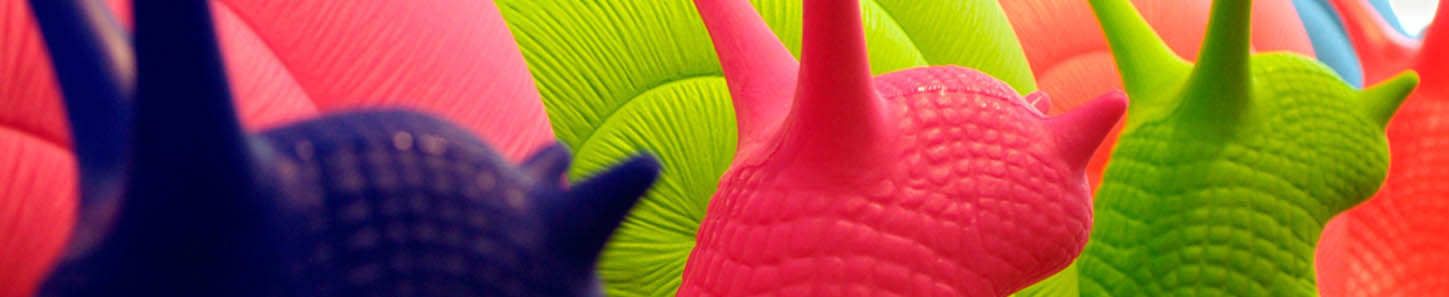
The new artwork by the Cracking Art collective comes to light with an installation at the Natural Science Museum of the Aosta Valley and in the town of Saint-Pierre (AO).
A total of 23 sculptures depicting the marmot will be showcased as part of Cracking Art’s latest project, created in collaboration with the Efisio Noussan Natural Science Museum of the Aosta Valley.
It is in this very museum that the Lyskamm Marmot is preserved. Retrieved from the glacier of the same name in the summer of 2022, it is the oldest mummified specimen ever found in Italy, dating back to the Neolithic period (approximately 4,500 years ago). Climate change, which is causing a rapid and progressive deterioration of the Alpine ecosystem, has brought to light the remains of an ancient and distant past.
The marmot specimen has been placed in a specially designed display case, ensuring its preservation for over 500 years. The internal environment is oxygen-free, with customizable and finely calibrated chemical-physical parameters to prevent deterioration. Its operation does not require electricity and is entirely eco-sustainable.
This extraordinary discovery has inspired a collaboration between the scientific museum and the artistic collective, celebrating the return to light of an animal that continues to characterize our mountains and is associated with numerous cultural and symbolic meanings.
Connected to the awakening of nature in springtime, the Groundhog Day tradition is well known as a prediction of winter’s duration. This makes the marmot a symbol of climate change, which is also disrupting the traditional knowledge once relied upon to guide human activities.
“Returned to the light”—this is how the museum welcomed the specimen to its collection. Its millennia-long slumber mirrors the long periods marmots naturally spend hibernating in their burrows, for up to six months at a time. The idea of continuous rebirth is thus deeply connected to the life of this charming rodent, which, when awake, serves as a true sentinel, keenly observing its surroundings.
“Depicting the marmot was one of our long-held dreams,” say the artists of the collective, “and dreaming is likely a key element during their long periods of sleep.”
“Celebrating life through play—the marmot’s favorite activity when awake—is a great source of joy for us, and we hope that our artworks will inspire visitors to explore this beautiful museum, which tells the story of landscapes so familiar to us.”
As is their tradition, the artists have created the sculptures in an oversized scale (125 cm in height) and in vivid colors, as their goal is not to produce naturalistic replicas but to craft a fantastic bestiary that represents our time—favoring forms and colors that evoke emotion and stimulate empathy.