
 November 11, 2016
Regeneration Riga
Art reveals who we are and who we long to be – Erwin McManus
In 2014, the same year Latvia entered in Eurozone, Riga has been chosen by European Union as Capital of Culture. During this period Riga, one of the most enchanting destinations bathed by Baltic Sea, has been the theatre for countless events and initiatives that have shown to the world the best of its cultural, artistic and social traditions.
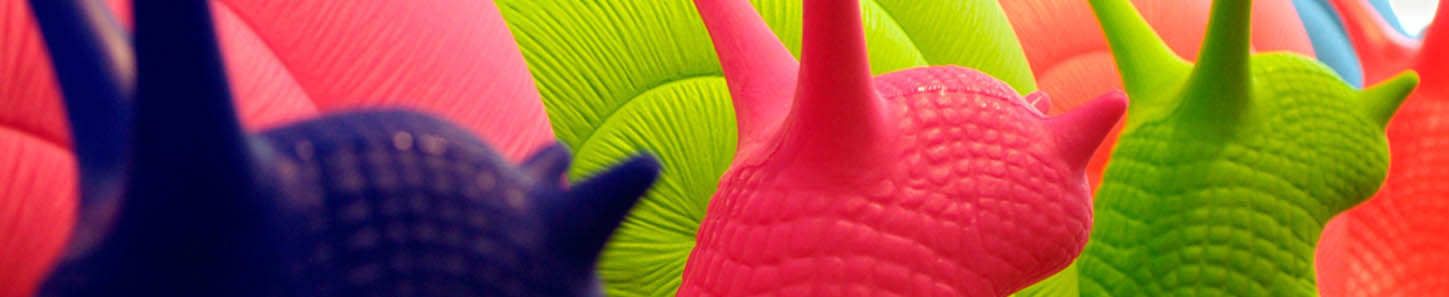
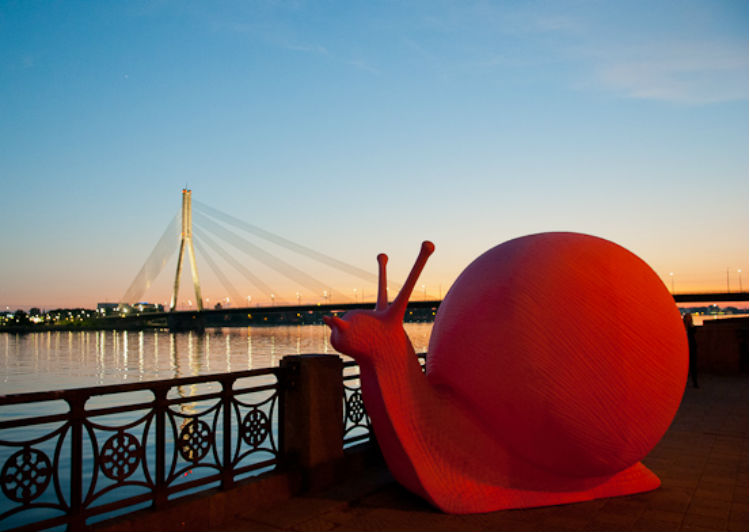
For the occasion, in order to celebrate the great change of the capital, 15 Cracking Art giant snails have been present during the event becoming mouthpieces of a very important message: to bring contemporary art in Latvia promoting the opening of the very first contemporary art museum in Riga.
When the capital was a crossroads by lovers of music, fine arts, dance, theater, cinema and new performative disciplines, to support the creation of a new contemporary art museum meant to promote Latvian art and the development of art education for both a national and international audience, having an important role in integrating culture in Riga.
Cracking Art snails, symbol of regeneration and renewal, could not ignore this slow journey towards a future full of new prospects. The snail in fact, born in 2008 for Expo 2015, represents for the movement a guide for evolution and improvement thanks to its burr that is able to make alive again what gets in touch with it.
For this reason red, blue, orange, yellow and white snails have traced a symbolic trail starting from the New National Library, passing near the Art Nouveau District and reaching the main interest points of the city such as the historical center (the Town Hall Square, the Cathedral, the Museum of Occupation for example), since 1997 in the UNESCO World Heritage list.
At the end of the initiative a celebrating event was realized: a number of snails were painted by some Latvian artists in front of the Museum of the Occupation to bring a message of participation in front of a place that evokes division and repression senselessness.
